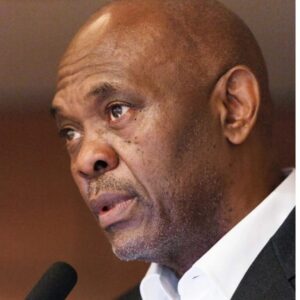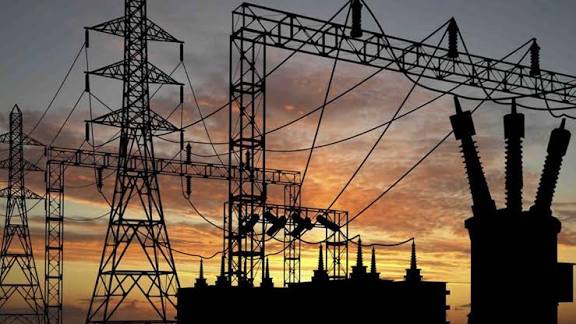
The Managing Director and Chief Executive Officer of the Niger Delta Power Holding Company, Jennifer Adighije, has urged the Federal Government to remove electricity subsidies for all customers and fully implement cost-reflective tariffs to stabilise Nigeria’s power sector.
Adighije made the call in a statement released in Lagos, citing deep-seated structural and liquidity challenges limiting the performance of the electricity market. She advocated decoupling government subsidies from electricity tariffs and gradually rolling out cost-reflective pricing across all customer segments.
According to her, a financially viable electricity market is critical to restoring investor confidence, attracting private capital and ensuring sustainable growth in the sector.
She noted that liquidity constraints remain severe, revealing that only about 30 per cent of market invoices are currently settled, putting pressure across the electricity value chain. Gas supply shortages also persist, with gas procurement accounting for nearly 60 per cent of operational costs for thermal power plants.
Adighije further highlighted a mismatch between installed generation capacity and the transmission network’s ability to evacuate power to distribution companies and end-users.
On operations, she said the NDPHC has built 10 power plants across 10 states under the National Integrated Power Project, with eight commissioned and six already in commercial operation. The company’s installed capacity is about 4,000 megawatts nearly 30 per cent of Nigeria’s grid-connected capacity.
Within the past year, she added, NDPHC recovered about 900 megawatts of previously dormant capacity through plant optimisation, improved operational discipline and predictive maintenance.
She also disclosed the recovery of 110 abandoned containers and 216 packages of critical power equipment worth millions of dollars from Nigerian ports. The equipment will be deployed to complete ongoing generation, transmission and distribution projects nationwide.
Beyond tariff reforms, Adighije said NDPHC is diversifying into renewable energy and direct power supply to industrial clusters to improve reliability and support economic growth. This includes solar and small hydro projects to complement gas-fired assets.
She revealed that a pilot solar power project is being developed for industrial clusters in Kano State, with plans to replicate the model in other hubs across the country.
Under the ‘Light Up Nigeria’ initiative, she said the company aims to provide reliable electricity to industrial and commercial clusters, markets, universities and residential communities through embedded and independent power solutions.
Adighije stressed that consistent implementation of policies especially the Electricity Act 2023 is vital to unlocking investment, strengthening infrastructure and boosting electricity demand. She expressed optimism that ongoing reforms and targeted investments would significantly improve power reliability in the coming years.