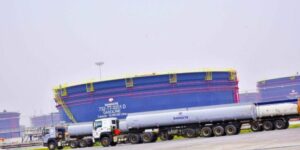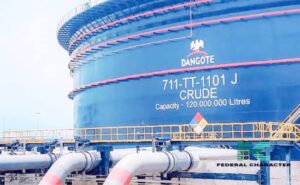
The Petroleum and Natural Gas Senior Staff Association of Nigeria (PENGASSAN) has said that political interference is the main reason Nigeria’s state-owned refineries have remained idle for years.
At the 4th Energy and Labour Summit in Abuja, PENGASSAN President, Festus Osifo, explained that unless the Federal Government pulls out of direct management, the facilities will never operate effectively. He urged the government to sell majority stakes to competent private investors while retaining only a minority shareholding, similar to the Nigeria Liquefied Natural Gas (NLNG) model.
Osifo argued that this approach would bring in professionals with the technical know-how to run the plants, while limiting political control which has repeatedly stalled progress.
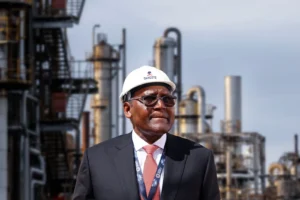
His remarks came after the Group CEO of the Nigerian National Petroleum Company Limited (NNPCL), Bayo Ojulari, pledged that the Port Harcourt, Warri, and Kaduna refineries would soon resume operations. This assurance contradicted recent comments by Aliko Dangote, who expressed doubts that the facilities would ever function again.
Despite more than $18 billion reportedly spent on maintenance, the refineries have stayed largely dormant. The Port Harcourt and Warri plants, which were briefly reopened last year, were later shut down again for repairs.
Osifo also stressed that Nigeria is not maximising its oil potential. With proven reserves of 37 billion barrels and daily production still below 2 million barrels, he warned that the country is under-producing and missing the chance to transform its wealth the way Abu Dhabi used oil revenues to build Dubai.
Meanwhile, the Executive Secretary of the Nigerian Content Development and Monitoring Board (NCDMB), Felix Ogbe, highlighted the importance of capacity development. He said Nigeria’s energy sector would only remain sustainable if citizens are equipped with skills in engineering, automation, safety, and digital technology.
The call for reforms adds to ongoing debates on whether government can successfully revive the refineries or whether private sector control is the only way forward.