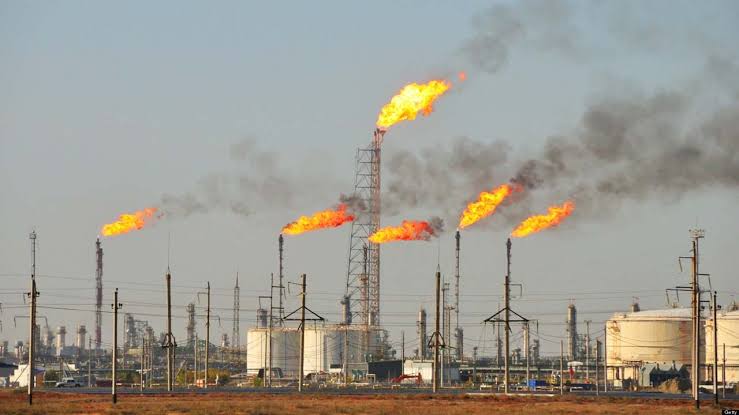
Nigeria’s gas industry recorded a notable boost in July, with the Nigerian Upstream Petroleum Regulatory Commission (NUPRC) reporting an average daily production of 7.59 billion standard cubic feet (bscf). The increase comes alongside a reduction in gas flaring to 7.16 percent, supporting the nation’s goal to eliminate routine flaring by 2030.
The July figures represent an 8.6 percent rise from 2024’s 6.99 bscf and nearly 10 percent higher than 2023’s 6.91 bscf, highlighting consistent growth in the sector over the past three years.
The commission attributed the drop in flaring to initiatives like the Nigerian Gas Flare Commercialisation Programme, a Decarbonisation and Sustainability Blueprint, Carbon Capture and Storage efforts, and the integration of sustainable practices in upstream petroleum projects.
Domestic gas supply under the Domestic Gas Delivery Obligation (DGDO) stood at 72.5 percent in July, slightly higher than June’s 71.8 percent. Production by contract type showed that Marginal Sole Risk operators contributed 63 percent, Production Sharing Contracts 24 percent, Joint Ventures 10 percent, and Sole Risk operators 3 percent.
Regarding gas usage, 35.88 percent of output went to exports, 27.82 percent was supplied locally, and 29.13 percent was used within operations for fuel, reinjection, and plant processes.
Gas-to-power supply also rose to 862.86 million standard cubic feet per day in July, the highest in three months, after monthly averages fluctuated between 780.23 mmscf/d in January and 886.83 mmscf/d in March.
The NUPRC’s report signals that Nigeria is steadily increasing gas production while making progress toward more sustainable operations.