Nigeria’s oil sector may be on the verge of its biggest shake-up in years as the federal government considers moving control of upstream contracts from the Nigerian National Petroleum Company Limited (NNPC) to the Nigeria Upstream Petroleum Regulatory Commission (NUPRC).
The plan, according to industry sources, is designed to close long-standing loopholes that have drained government revenues through opaque deductions and poor accountability. Analysts describe it as one of the boldest reforms since the 2021 Petroleum Industry Act (PIA), which was meant to streamline roles in the sector.
Under the current setup, NNPC operates as both a commercial player and a gatekeeper for contracts — a dual role critics argue has blurred lines and enabled manipulation. Lawmakers now believe handing contract management to NUPRC could boost transparency, strengthen revenue flows, and restore confidence in government oversight.
However, experts warn that the proposal is not without complications. If NUPRC takes on both contract control and regulatory powers, it risks becoming “judge and jury” in the same industry — a scenario that could unsettle investors and trigger disputes over existing agreements with international oil companies.
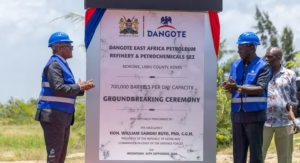
Nigeria’s oil industry is already facing deep-rooted challenges, including crude theft, pipeline sabotage, and years of underinvestment. Production levels remain below the country’s OPEC quota, while domestic refining is only just starting to recover with the Warri plant’s restart and the ongoing ramp-up of the Dangote Refinery.
For now, the proposed transfer signals government’s determination to extract more value from oil — the nation’s primary revenue source. Whether it results in genuine reform or simply shifts the opacity from one agency to another will depend on how much independence and transparency NUPRC is allowed to exercise.