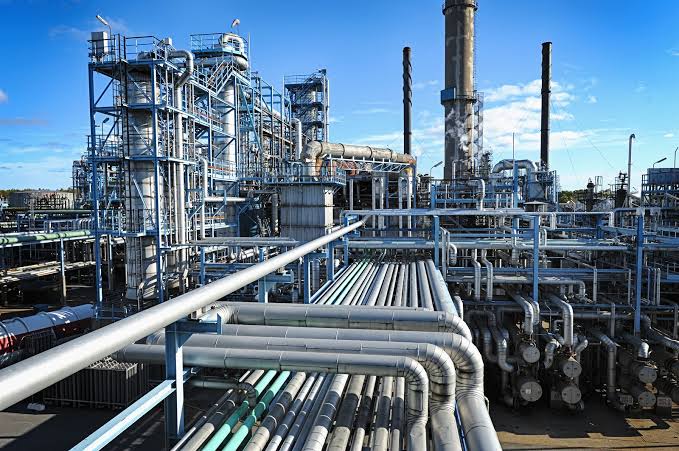
The National Orientation Agency says the successful River Niger crossing by the OB3 gas pipeline has, for the first time, linked Nigeria’s gas transmission lines into one coherent national network.
In a recent explainer, the agency described the development as a landmark step for the country’s gas infrastructure, noting that the project now connects gas fields in the east to demand centres in the west while also supplying the Ajaokuta-Kaduna-Kano Gas Pipeline in the north.
According to the NOA, the OB3 pipeline had long been considered the missing connection in Nigeria’s gas grid. With the River Niger segment completed, gas can now move more freely across regions, improving supply to industries and power plants.
The agency said the development could unlock over 500 million standard cubic feet of additional gas per day for domestic use in the near term. It added that the pipeline’s installed capacity of about 2 billion standard cubic feet per day would support fertiliser production, petrochemical operations, cement manufacturing and electricity generation, while also reducing gas flaring through improved evacuation of associated gas.
The 130-kilometre, 48-inch pipeline project began in 2016 with an initial completion target of March 2024. However, progress was slowed by challenging terrain in the Niger Delta, including unstable soil, high water tables and complex riverbed geology that made conventional drilling difficult.
The breakthrough came through horizontal directional drilling executed by PCE Nigeria Limited, a local engineering firm that handled the technically demanding River Niger crossing.
Speaking on the achievement, Bayo Ojulari, group chief executive officer of the Nigerian National Petroleum Company Limited, said lessons learned from the AKK pipeline project were applied to overcome the environmental challenges encountered on OB3.
The NOA noted that the milestone could help curb gas flaring and improve domestic gas utilisation, with positive implications for electricity supply as more gas reaches thermal power stations.
It also linked the OB3 and AKK pipelines to the economic agenda of Bola Tinubu, describing both as strategic infrastructure capable of supporting industrial growth and regional integration.
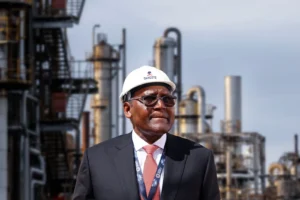
On the broader economic impact, Aliko Dangote was quoted as saying the enhanced gas connectivity could attract investments of at least $2 billion into the Nigerian economy.
The agency further praised the role of Nigerian engineers in delivering the complex project, saying the successful crossing demonstrates growing local capacity to execute world-class infrastructure works.