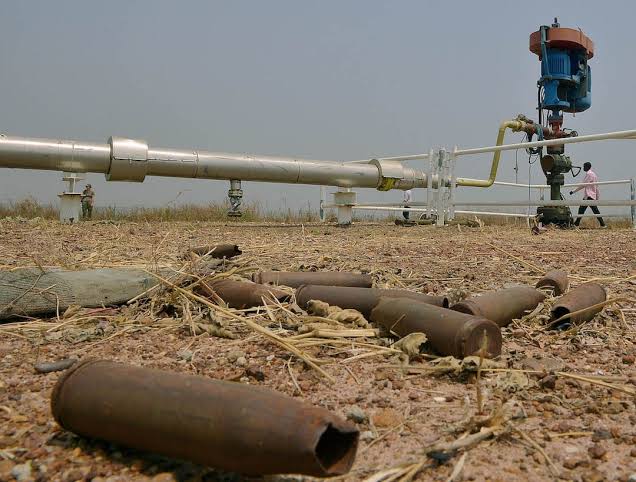
South Sudan has resumed the flow of crude to international markets after recent attacks on energy facilities in Sudan temporarily halted operations across several fields.
Petroleum Ministry Undersecretary Deng Lual Wol confirmed in Juba on Wednesday that export activities are now running normally, with crude once again moving through the pipeline network to Port Sudan on the Red Sea. The shutdown earlier in the week followed assaults on key infrastructure inside Sudan, which remains in the grip of a prolonged civil conflict.
Oil producers operating across both countries had paused output as a precaution. South Sudan, which is landlocked, relies heavily on Sudanese pipelines and terminals to move its crude to global buyers.
According to Wol, Dar Petroleum Operating Co. has restarted production at 97,000 barrels per day and is preparing to ramp output back to its usual level of around 150,000 barrels. Greater Pioneer Operating Co. is currently producing 40,000 barrels per day, with expectations to reach its normal 50,000. Sudd Petroleum Operating Co. is operating at 13,000 barrels per day, slightly below its pre-disruption figure of 15,000.
The temporary outage stemmed from an emergency shutdown carried out by Bashayer Pipeline Co. on November 15 after attacks targeted its Al Jabalain processing facility and a nearby power station. Days earlier, Sudan’s state-owned Petrolines for Crude Oil Co. reported a drone strike on the Heglig oil field, prompting force majeure at a subsidiary in which it holds a major stake.
The quick restoration of exports offers relief for South Sudan’s oil-dependent economy, though the episode highlights the growing vulnerability of cross-border energy infrastructure amid ongoing instability in Sudan.