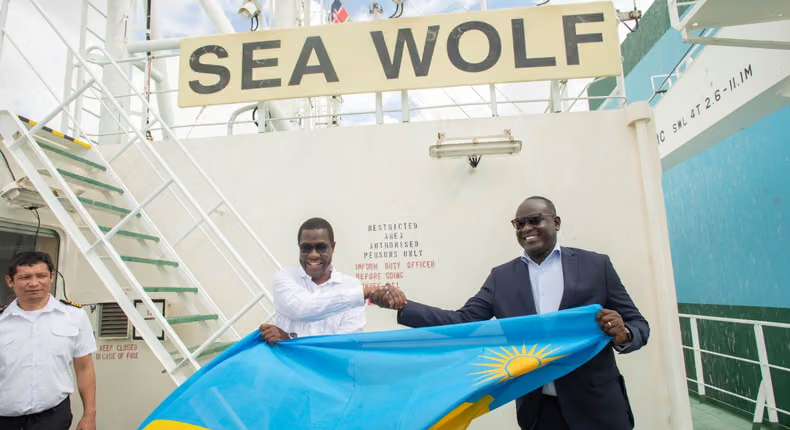
Kenya has begun supplying a new petroleum route to Rwanda after receiving its first major bulk shipment of refined fuel for the landlocked country.
The 40,000-tonne cargo, supplied by Oman’s OQ Trading, arrived at the Kipevu Oil Terminal 2 in Mombasa on September 29 aboard MT Sea Wolf. The shipment is part of a new government-to-government fuel import arrangement between Rwanda and Oman.
The development activates a new Kenya-Rwanda petroleum corridor established under an agreement signed by both countries on June 29. Under the arrangement, Rwanda will use Kenya’s port, pipeline and storage infrastructure to transport imported fuel through the Northern Corridor.
The new route gives Rwanda an alternative to its traditional reliance on Tanzania’s Dar es Salaam port for petroleum imports. It is also expected to improve the country’s flexibility in sourcing fuel and reduce potential supply bottlenecks.
Kenya expects the volume of petroleum products moving through its infrastructure for Rwanda to rise substantially. Annual transit volumes are projected to increase from about 50,000 cubic metres to more than 500,000 cubic metres.
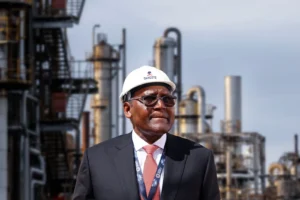
The development comes as Kenya prepares for the construction of Dangote’s proposed $17 billion refinery in Lamu. The planned facility is expected to process up to 700,000 barrels of crude oil per day and serve petroleum markets across East Africa.
Rwanda could become one of the potential markets for the planned refinery. Rwandan President Paul Kagame said in August that his government had held preliminary discussions with Dangote about potentially taking a stake in the project, although no final agreement had been reached.
The current fuel shipment is not linked to Dangote’s planned refinery, as the products were supplied by OQ Trading. However, the new supply corridor provides an existing logistics route that could support future regional fuel distribution if the Lamu refinery is completed.
Kenya is positioning the project as part of a broader effort to strengthen its role in East Africa’s petroleum trade, potentially supplying refined products to Rwanda, Uganda, South Sudan and other landlocked markets.