Vaaris Resources has emerged as a new but influential player in Nigeria’s oil and gas sector following its agreement to acquire TotalEnergies’ 10 percent interest in the Renaissance Joint Venture, a move that highlights the growing role of indigenous-led consortia in taking over assets divested by international oil companies.
The transaction, announced on January 14, covers 15 oil-producing licences as well as operational interests in three gas licences that form a critical part of Nigeria’s liquefied natural gas supply chain. These assets contributed an estimated 16,000 barrels of oil equivalent per day to TotalEnergies’ net production in 2025.
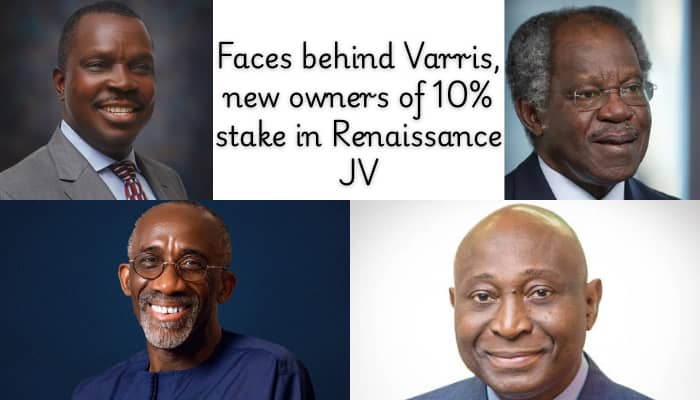
Although Vaaris Resources was incorporated only in December, the company is backed by experienced industry figures with deep roots in Nigeria’s energy and finance sectors. At the centre of the consortium is Austin Avuru, former chief executive of Seplat Energy, who is widely regarded as one of the architects of Nigeria’s indigenous upstream oil industry.
Avuru, who confirmed that he assembled the investor group behind Vaaris, previously led Seplat through a period of rapid growth, including the acquisition and operation of assets divested by Shell, Chevron, and ExxonMobil. His involvement signals continuity in the model where local companies take over mature assets and apply domestic expertise to sustain production.
Industry sources have also linked Bayo Ogunlesi, chairman of Global Infrastructure Partners, to the Vaaris consortium. While his involvement has not been publicly confirmed, analysts note that Ogunlesi’s background in large-scale infrastructure financing would strengthen the group’s ability to manage complex oil and gas infrastructure and attract long-term capital.
The structure of the deal reinforces this view. While TotalEnergies is expected to retain economic interests in three gas-producing licences, operational control would move to Vaaris, pointing to a partnership arrangement that blends local operational management with international investment participation.
Another prominent name associated with the transaction is Hakeem Belo-Osagie, founder of Metis Capital Management. Known for his extensive experience in finance and corporate governance, Belo-Osagie’s reported involvement could help Vaaris address funding and regulatory requirements that proved challenging in a previous, failed sale of the same stake to another buyer.
That earlier transaction collapsed due to financing constraints and unmet regulatory obligations, according to Nigeria’s upstream regulator. With a stronger financial and technical bench, Vaaris is positioning itself as a more credible successor.
Also linked to the consortium is Tein George, chairman of Deep Wells Energy Services and a veteran of Nigeria’s oil services industry. George’s background spans banking, engineering, fabrication, and strategic advisory roles, adding operational depth to the group. He also chairs Aveon Offshore, Nigeria’s largest locally owned oil and gas fabrication yard.
Attention now turns to regulatory approval. The Nigerian Upstream Petroleum Regulatory Commission will assess Vaaris’ financial capacity, technical competence, and compliance with local content rules before approving the transaction. Although the purchase price has not been disclosed, market sources suggest it may reflect prevailing market conditions and the maturity of the assets involved.
If approved, the deal would underscore a broader transition in Nigeria’s oil sector, as international energy companies continue to exit onshore assets while locally driven investors step in to manage ageing infrastructure and sustain output.
For Vaaris, the challenge will lie in translating experience and influence into operational success, balancing production goals with environmental, regulatory, and community responsibilities that have shaped the sector’s evolution.