President Bola Tinubu has inaugurated the new Board and Executive Management Team of the Nigerian National Petroleum Company Limited (NNPCL), directing them to urgently boost Nigeria’s oil and gas production to meet ambitious national targets.
At the ceremony held Thursday at the Presidential Villa in Abuja, Tinubu charged the board with the responsibility of aligning with his administration’s energy reform strategy.“These targets are not just aspirational – they are central to our economic revitalization strategy,” Tinubu declared.
“Your task is clear: deliver results.”The president outlined the administration’s goals for the sector, which include raising daily crude oil production to 2 million barrels by 2027 and 3 million barrels by 2030, as well as increasing daily gas output to 8 billion cubic feet by 2027 and 10 billion cubic feet by 2030.
He also set a target of expanding refining capacity to 200,000 barrels per day by 2027 and 500,000 barrels per day by 2030.The new board appointments, effective from April 2, 2025, end the tenure of Mele Kyari as Group CEO.
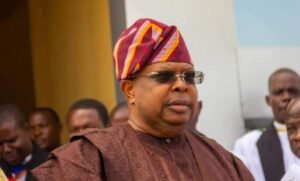
Leading the new board is Ahmadu Musa Kida, a petroleum engineer and former Deputy MD at Total E&P. He is joined by Oritsemeyiwa Eyesan Ojulari, the new NNPCL Group CEO, known for his role in the $2.4 billion acquisition of Shell’s Nigerian onshore assets by a local consortium.
The full board includes:
Ahmadu Musa Kida – Board Chairman
Babs Omotowa – Non-Executive Director (North Central)Bello Rabiu – North West
Yusuf Usman – North East
Austin Avuru – South-South
David Ige – South WestHenry Obih – South East
Lydia Shehu Jafiya – Ministry of Finance
Aminu Said Ahmed – Ministry of Petroleum Resources
President Tinubu emphasized the need for a comprehensive review of NNPCL’s asset portfolio, especially joint venture operations. “We must align operations with value optimization goals,” he said.
The inauguration took place just ahead of the APC National Summit and signals a new chapter for the NNPCL as Nigeria navigates global energy transitions, rising competition, and the need to maximize local production.