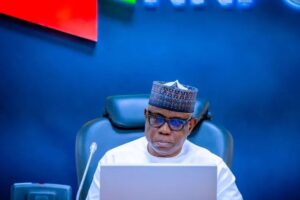
President Bola Tinubu’s decision to grant a posthumous pardon to the Ogoni Nine — executed activists blamed for the 1995 killing of four Ogoni chiefs — has triggered a fierce backlash and cast new doubt on Nigeria’s hopes to restart oil production in the volatile region.
The pardon was a long-standing demand by some Ogoni leaders who insisted on it before any resumption of oil extraction in the Niger Delta. But families of the slain Ogoni Four — Albert Badey, Edward Kobani, Samuel Orage, and Theophilus Orage — say Tinubu’s move amounts to honoring murderers.
“Today, Nigeria honours murderers,” said Suage Badey, son of Chief Albert Badey. “Seven of them participated in the killing of my father. My father’s belongings were found in their possession while Chief Kobani’s wristwatch was found with them.”
The Ogoni Nine, including writer and environmental activist Ken Saro-Wiwa, were executed by the Abacha regime after a controversial tribunal process widely condemned as politically motivated. Though their deaths sparked international outrage and led to Nigeria’s suspension from the Commonwealth, the Nigerian state had never formally exonerated them — until now.
The Movement for the Survival of the Ogoni People (MOSOP), which Saro-Wiwa once led, welcomed the pardon but said it didn’t go far enough.
“The pardon suggests a crime was committed and forgiven. But no crime ever took place,” MOSOP argued, maintaining the men were victims of state repression, not perpetrators of murder. The group is now calling on Tinubu to go further and “absolve the Ogoni Nine.”
But not everyone in Ogoniland agrees.
Suage Badey insists the government is negotiating with the wrong leaders and warned that Tinubu’s hopes for oil production to restart by the end of 2025 are misplaced.
“My father and Chief Kobani were from Bodo, a major oil community in Ogoni. We are the gateway to the export of oil through Bonny. Ken Saro-Wiwa’s community doesn’t have a drop of oil,” he said. “The federal government should be mindful of what they have just done. They have thrown us into more confusion and disregarded the murder of the four whose bodies have not been found.”
With tensions rising, the presidency’s attempt at reconciliation could unravel the very progress it hoped to make — and put the brakes on long-awaited energy developments in one of Nigeria’s richest oil belts.
National Security Adviser Nuhu Ribadu, who is leading talks with Ogoni leaders, declined to comment.