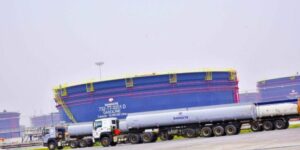
TotalEnergies is making profits from transporting discounted crude oil through the Strait of Hormuz despite the higher cost and security risks associated with the route.
The company’s Chief Executive Officer, Patrick Pouyanne, disclosed this on Monday at an energy conference in Stavanger, Norway. He said TotalEnergies remains one of the major traders of crude from Iraq and Qatar, with some shipments still passing through the strategic waterway.
Pouyanne explained that oil producers are offering their crude at reduced prices because they are eager to get supplies into the international market amid disruptions in the region. He said some crude was being sold for about $50 to $60 per barrel, while Brent crude was trading above $90.
Although transporting a very large crude carrier through Hormuz and back costs around $20 million, the additional expense works out to roughly $10 per barrel for a vessel carrying about two million barrels. The discount on the crude, according to Pouyanne, more than offsets the extra transportation cost.
The situation is more difficult for refined petroleum products. Pouyanne said the smaller vessels used to transport such products result in much higher costs, with transportation adding as much as $50 per barrel. This makes the movement of refined products through the waterway commercially unattractive.
He said the disruption has contributed to reduced availability of petroleum products, creating a market where crude prices face downward pressure while refined products remain expensive.
Despite continuing to use the route, TotalEnergies is also seeking alternative ways to move oil out of the Middle East.
Pouyanne said the company plans to participate in a pipeline project connecting Baghdad with Syria and invest in expanding the Fujairah pipeline in Abu Dhabi.
The existing Habshan-Fujairah pipeline can transport up to 1.8 million barrels of crude per day and provides the United Arab Emirates with an export route that bypasses the Strait of Hormuz. The UAE plans to double the pipeline’s capacity by next year.
The developments highlight the growing importance of alternative oil export routes as security concerns continue to affect shipping through one of the world’s major energy corridors.