Nigeria’s Federal Government has stepped in to ease mounting pressure on airlines over soaring aviation fuel costs, proposing that fuel marketers grant carriers a 30-day payment window and sell Jet A1 directly to operators.
The proposal emerged from high-level meetings involving the aviation and petroleum ministries, regulators, airline operators and fuel suppliers, convened after concerns that rising jet fuel prices could disrupt flight operations nationwide.
The Minister of Aviation and Aerospace Development, Festus Keyamo, had earlier initiated discussions that led to a broader stakeholders’ session coordinated by the Nigerian Midstream and Downstream Petroleum Regulatory Authority. Aviation agencies including the Federal Airports Authority of Nigeria and the Nigerian Civil Aviation Authority also participated.
New price band proposed
At the meeting, participants reviewed pricing components linked to international oil benchmarks and agreed on a fresh indicative price range for aviation fuel. The suggested band places Jet A1 between about ₦1,760 and ₦1,988 per litre in Lagos, and slightly higher in Abuja, depending on prevailing global market conditions.
The figures were calculated using recent international price averages, with a warning that continued volatility in crude oil markets driven partly by geopolitical tensions – could push prices higher outside that window.
Regulators were also advised to reduce the number of airside fuel distributors at airports to only those with verified capacity and infrastructure, in a bid to streamline supply and cut inefficiencies that add to final costs.
Debt concerns and credit relief
Another major issue was the growing debt profile between airlines and fuel marketers. The ministry was asked to facilitate talks aimed at resolving outstanding payments while encouraging suppliers to introduce flexible terms, including the proposed 30-day credit arrangement.
Stakeholders further recommended that Aviation Turbine Kerosene be included in the Federal Government’s naira-for-crude initiative, a policy designed to reduce foreign exchange exposure in petroleum transactions.
Airlines warn of unsustainable costs
Domestic carriers say the situation has reached alarming levels. Ibom Air disclosed that the cost of fueling a single flight has jumped from about ₦2.1m earlier in the year to roughly ₦7.6m in late April.
The airline described the increase as unprecedented, noting that despite the spike, competitive pressures have limited their ability to raise ticket fares in proportion to operating costs.
Similar concerns were echoed by United Nigeria Airlines, which said all operators source fuel from the same market and are affected equally, especially airlines operating larger aircraft that consume more fuel per trip.
The Airline Operators of Nigeria warned that Jet A1 prices, when logistics and storage are added, now exceed ₦3,000 per litre in some cases, putting airlines under severe financial strain and raising the risk of service disruptions.
Refinery exports and pricing debate
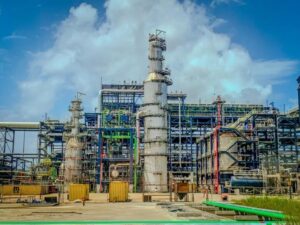
The situation has sparked debate over the role of the Dangote Petroleum Refinery, which produces large volumes of jet fuel daily. Reports indicate that a significant share of this output is exported to Europe, where strong demand and higher margins make sales attractive.
While the refinery’s ex-depot price is broadly comparable to imported fuel landing costs, additional distribution expenses within Nigeria significantly raise the price airlines ultimately pay.
Industry analysts note that Nigeria’s fully deregulated fuel market allows domestic prices to track global trends, meaning the presence of a mega refinery does not automatically guarantee cheaper fuel locally.
Wider aviation sector strain
The jet fuel challenge comes as airlines also face a standoff with ground handling companies over unpaid debts running into billions of naira, with service providers threatening to suspend operations.
This has raised fears of widespread flight delays or cancellations if disputes are not resolved quickly.
Experts say that beyond short-term pricing adjustments and credit relief, a lasting solution will depend on improving crude supply to local refineries, cutting inefficiencies in the distribution chain, and stabilising pricing mechanisms in a volatile global market.
For now, airlines are watching closely to see whether the government’s proposed measures can bring immediate relief and prevent further disruption to Nigeria’s air transport system.