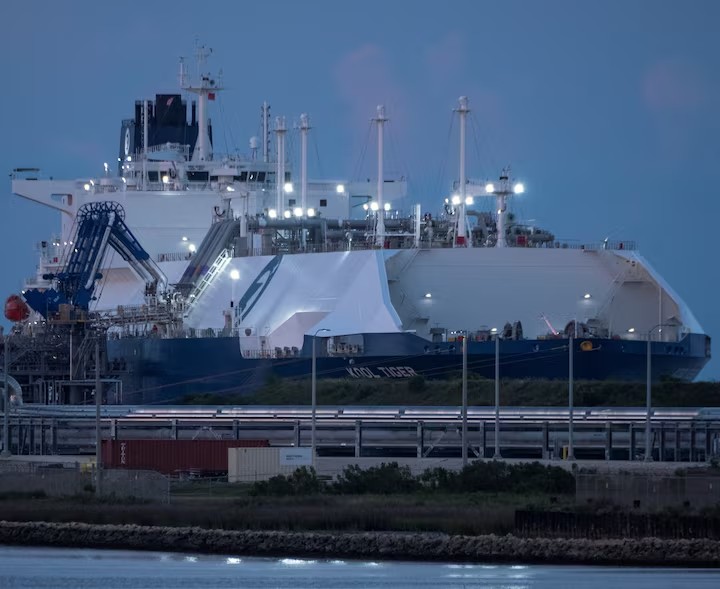
U.S. liquefied natural gas (LNG) projects are multiplying as export demand climbs, but surging labor costs, tariffs, and supply chain pressures are forcing developers to rethink how they build. Many are now embracing modular construction—assembling sections of plants in factories before transporting them to project sites—as a way to keep expenses under control and speed up delivery.
Research firm Wood Mackenzie recently noted that project sponsors face difficult decisions on procurement, contractor agreements, and risk-sharing. The push toward modular construction, it said, reflects the need to stay competitive in an increasingly expensive environment.
Stonepeak, a U.S. private equity group that took a 40% stake in Woodside Energy’s 16.6 million tonnes per annum (Mtpa) Louisiana LNG project earlier this year, is among those betting on the model. “Offsite fabrication cuts labor needs, trims costs, and can shorten timelines,” said James Wyper, a senior managing director at Stonepeak.
The method is not new—Russia’s Novatek first put it to large-scale use at its 16.5 Mtpa Yamal LNG facility in the Arctic, completed in phases by 2018—but it is gaining traction fast in the U.S. Venture Global pioneered the approach domestically at its Calcasieu Pass plant in Louisiana, which went online with standardized modules shipped from Italy. The company expects its ongoing CP2 project to be fully built by 2027 using the same playbook.
Other U.S. players are following suit. Commonwealth LNG, backed by investment firm Kimmeridge, is deploying the approach at its 9.5 Mtpa plant in Cameron, Louisiana. By prefabricating modules in specialized yards, the project will slash on-site labor hours by more than 10 million, limiting peak construction staff to fewer than 2,000—far below the 8,000 to 10,000 typically required for conventional builds.
Baker Hughes, a leading supplier of LNG equipment, says global interest is growing as the modular model allows developers to unlock smaller sites and add capacity incrementally. Its prefabricated units can process between 0.8 and 2 Mtpa each, making them suitable for projects once considered too small or remote for traditional plants.
The shift is also reshaping the relationship between developers and engineering, procurement, and construction (EPC) firms. Instead of a single contractor handling most of the work, projects may now require multiple partners and more flexible risk-sharing. Venture Global has even built a large in-house EPC team to oversee its facilities.
Still, the strategy carries risks. Shipping massive modules across long distances can cause delays or damage, and not every site is suited to the approach. “It’s not a one-size-fits-all solution,” said Wood Mackenzie’s Mark Bononi. “The benefits are real, but so are the challenges.”