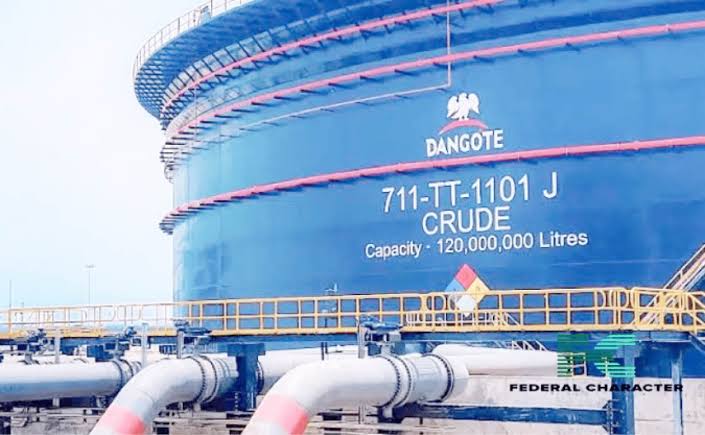
The Federal Government has intensified efforts to resolve a dispute with Dangote Petroleum Refinery after the company’s decision to introduce a dollar-based pricing model for petrol sparked uncertainty in the downstream petroleum market.
The development has prompted many petroleum marketers to slow or suspend fresh fuel purchases as they await clarity on the refinery’s new pricing template, raising concerns over possible supply disruptions and higher pump prices. While some marketers claimed fuel loading had slowed at the refinery, Dangote Petroleum Refinery denied suspending operations, insisting that loading activities were continuing.
The Independent Petroleum Marketers Association of Nigeria (IPMAN) said many marketers were reluctant to buy large volumes of petrol because they could not predict whether prices would rise or fall in the coming days. The association warned that uncertainty over pricing had reduced product lifting and urged the government to quickly resolve the situation.
Government sources said the disagreement goes beyond the refinery’s decision to sell petrol in dollars. According to the sources, the refinery is dissatisfied with the volume of crude supplied to it under the naira-for-crude arrangement and has also raised concerns over the continued issuance of petrol import licences to marketers despite its refining capacity.
The Federal Government, however, maintained that it must preserve competition in the downstream sector and ensure adequate fuel supply, stressing that no single operator can dominate the market.
Meanwhile, the Federal Competition and Consumer Protection Commission (FCCPC) reiterated that the naira remains Nigeria’s only legal tender for domestic commercial transactions and expressed concern that recent declines in global crude oil prices have not translated into lower petrol prices for consumers.
The latest development comes amid broader changes in Nigeria’s petroleum market. Data from the Nigerian Midstream and Downstream Petroleum Regulatory Authority showed that liquefied petroleum gas (cooking gas) imports rose by more than 1,400 per cent in the first half of 2026 as petrol imports declined by 22 per cent. Industry analysts attributed the surge in LPG imports to rising household demand and increased investment in gas infrastructure, while the drop in petrol imports reflects growing domestic refining capacity, led largely by Dangote Refinery.
The uncertainty also follows the approval by the Economic Community of West African States (ECOWAS) of the Nigeria–Morocco Gas Pipeline project. The regional bloc endorsed plans to fast-track implementation of the strategic pipeline, which is expected to improve energy security, deepen regional integration and expand access to natural gas across West Africa and beyond. The project is also expected to strengthen Nigeria’s position as a major gas supplier while supporting long-term economic growth across participating countries.