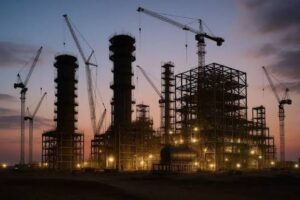
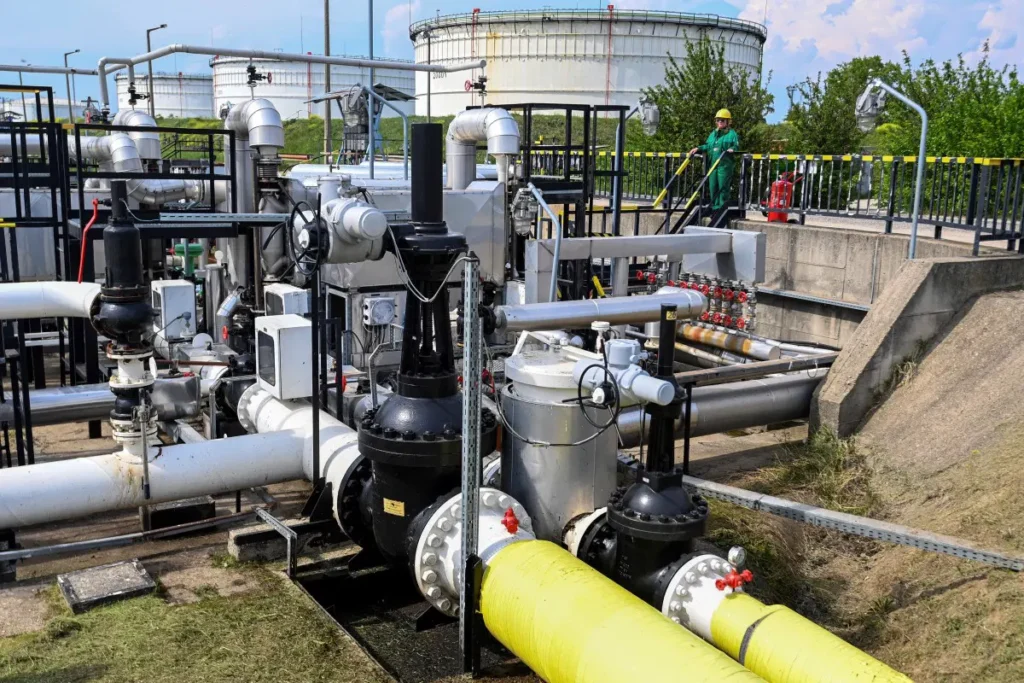
The Government of Trinidad and Tobago plans to reopen the country’s Petrotrin oil refinery as part of efforts to strengthen fuel security, revive economic activity and attract investment into the energy sector.
Finance Minister Davendranath Tancoo announced the plan on Monday while presenting the country’s TT$63.3 billion national budget to Parliament. He said the government was assessing proposals from shortlisted local and international investors following the submission of a comprehensive report by the refinery restart committee.
The refinery, located at Pointe-a-Pierre, was shut down on November 30, 2018, under the administration of former Prime Minister Keith Rowley after accumulating an estimated TT$12 billion in debt and recording losses of about TT$8 billion over five years.
Tancoo said the government intended to pursue a phased restart, stressing that any agreement must be commercially viable, fully funded and structured to protect the country’s financial interests.
He added that the closure had affected thousands of people and small businesses in communities stretching from Couva to Cedros, including contractors and local traders who depended on refinery operations for their livelihoods.
The shutdown also changed Trinidad and Tobago’s position in the petroleum products market. According to Tancoo, the country moved from exporting refined products to relying on imports for its diesel, gasoline, fuel oil and engine oil requirements.
The government’s plan comes as it seeks to address wider challenges in the energy industry, which generates more than 70 per cent of the country’s foreign exchange earnings through energy commodity exports.
Tancoo said natural gas production had fallen by about 45 per cent to 2.4 billion cubic feet per day, contributing to the closure of Atlantic LNG’s Train 1 and several petrochemical plants. The government is working with energy companies to increase gas supplies and restore industrial production.
Several projects are expected to support this effort. These include developments operated by bpTT and EOG, alongside other projects scheduled to begin supplying gas in 2027. The government is also pursuing investment in offshore exploration and production.
Tancoo said the country had identified potential oil and gas investment worth US$21 billion involving ExxonMobil. The company has completed a three-dimensional seismic survey in an ultra-deepwater block, with analysis underway to identify possible drilling targets.
The government also expects upstream capital expenditure to exceed US$2 billion in 2026, with further spending projected for subsequent years.
Authorities are seeking to accelerate energy projects through a new Energy Accelerator Hub, designed to coordinate 33 approvals across eight ministries and agencies and reduce delays in moving projects from planning to production.
The proposed refinery reopening forms part of the government’s broader strategy to restore the country’s refining capacity, improve energy security and support businesses and communities affected by the 2018 shutdown.